What exactly is the metaverse?

Introduction
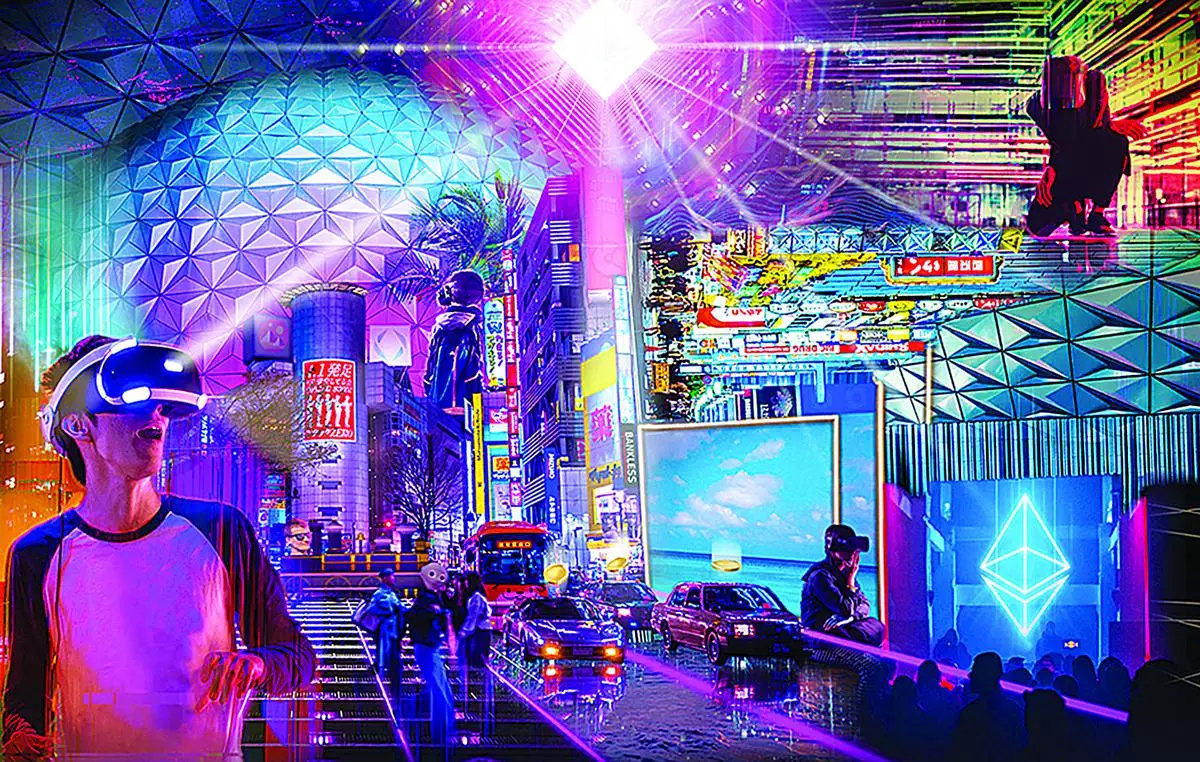
Imagine a virtual reality where billions of people may communicate with one another, learn, shop, and live their lives comfortably on their couches in the real world.
In this universe, the computer screens we use to access the global information web have developed into doors into a tangible, three-dimensional virtual world that is larger and better than real life. Avatars—digital representations of ourselves—move freely between experiences, bringing our identities and money with them.
This imagination could actually be valid...
Have you heard of the term "metaverse" but aren't exactly sure what it means? Look no further! In this article, we will delve into the concept of the metaverse, exploring its origins, how it is experienced through virtual and augmented reality, and its potential impact on society. We will also consider the ethical considerations surrounding the metaverse and discuss its possible future. By the end of this article, you will have a thorough understanding of what the metaverse is and its potential significance.
What is the Metaverse?
 |
| Image source: siteselection.com/Ron Starner |
The metaverse, also known as the virtual universe, is a term coined by science fiction writer Neal Stephenson in his 1992 novel "Snow Crash." It refers to a shared virtual reality space that is accessed through the internet and can be used for a variety of purposes, including socializing, education, business, entertainment, and more.
In the metaverse, users can create and customize their own avatars, or virtual representations of themselves, and interact with others in a virtual world. They can participate in activities and events, visit virtual locations, and even purchase virtual goods.
The metaverse is often compared to the internet, but it is more immersive and interactive. It allows users to experience a sense of presence and connection with others in a virtual space, as well as with the virtual environment itself.
Some examples of the metaverse include virtual reality games and social media platforms, as well as virtual events and conferences. It is a rapidly growing field, with many companies and organizations exploring the potential uses and applications of the metaverse.
Overall, the metaverse is an exciting and innovative concept that has the potential to revolutionize the way we interact and engage with each other, as well as the way we access and experience information and entertainment.
The Origins of the Metaverse
 |
| Image source:https://www.22and5.com/wp-content/uploads/2022/11/snow_crash.jpg |
The term "metaverse" was coined by sci-fi author Neal Stephenson in his 1992 novel "Snow Crash," in which he described a virtual reality world where people could interact with each other and digital representations of real-world objects. However, the concept of a virtual reality world where people could communicate and interact with each other dates back much further.
One of the earliest examples of a metaverse-like concept can be found in the 1978 novel "The Hitchhiker's Guide to the Galaxy," in which the character Ford Prefect is described as having a "sub-etha" sense that allows him to perceive and interact with virtual reality environments. In the 1980s, virtual reality arcades began to appear, offering early glimpses of what a metaverse might look like.
It wasn't until the widespread adoption of the internet and the development of more advanced graphics and computer hardware that the concept of the metaverse began to become a reality. In the late 1990s and early 2000s, virtual worlds such as Second Life and World of Warcraft allowed users to create and customize their own avatars, communicate with other users, and explore virtual environments.
Exploring the Metaverse: Virtual Reality and Augmented Reality

Image source: https://executive.timespro.com/_next/image/?url=https%3A%2F%2Fs3.ap-south-1.amazonaws.
Virtual Reality (VR) and Augmented Reality (AR) are two technologies that have the potential to revolutionize the way we interact with the digital world. The term "metaverse" refers to a collective virtual shared space, created by the convergence of virtually enhanced physical reality and physically persistent virtual space, including the sum of all virtual worlds, augmented reality, and the internet.
In VR, users are fully immersed in a simulated environment, often using a headset and controller to interact with the virtual world. This technology has been used for entertainment purposes, such as video games, but has also been applied in fields such as education and healthcare for training and therapy.
AR, on the other hand, enhances the physical world by overlaying digital information onto it. This can be achieved through devices such as smartphone cameras or specialized glasses. AR has practical applications in industries like construction, where workers can access digital blueprints and information while on the job site, as well as in marketing, where companies can create interactive experiences for customers.
Both VR and AR have the potential to change the way we live and work, creating new possibilities for communication, education, and entertainment. As these technologies continue to advance, it will be exciting to see how the metaverse continues to evolve and what new applications will emerge.
The Potentials of the Metaverse

Image source: https://daraminer.com/wp-content/uploads/2021/12/metaverse-gaming-1024x576.jpg
The potential of the metaverse is vast and limitless. Today, the metaverse is still in its early stages of development, but it has the potential to revolutionize the way we interact with each other and the world around us. From virtual reality gaming and education to virtual events and socializing, the possibilities for the metaverse are endless.
One of the biggest potentials of the metaverse is its ability to create immersive, interactive experiences. Imagine being able to visit a virtual version of a famous museum or monument, or attending a concert or sporting event in a virtual arena. The metaverse allows users to engage with these experiences in a way that feels real and authentic, even though they are happening entirely within a digital realm.
Another potential of the metaverse is its ability to facilitate communication and collaboration. Users can work together on projects, attend meetings, or engage in social activities from anywhere in the world. This can be especially useful for businesses, as it allows remote teams to work together seamlessly.
The metaverse also has the potential to revolutionize education and learning. Students can attend virtual classes, participate in simulations and experiments, and explore virtual worlds that are designed to teach them about specific topics. This can be especially beneficial for students who are unable to attend traditional, in-person classes due to geography or other constraints.
Overall, the potential of the metaverse is endless and exciting. As technology continues to evolve, it is likely that we will see even more innovative and revolutionary uses for this virtual world.
The Ethics of the Metaverse

Image source: https://cdn.benzinga.com/files/images/story/2022/05/31/shutterstock_2062865573.jpg
The term "metaverse" refers to a collective virtual shared space, created by the convergence of virtually enhanced physical reality and physically persistent virtual space, including the sum of all virtual worlds, augmented realities, and the internet. As the concept of the metaverse becomes more mainstream and technology advances, it is important to consider the ethical implications of this virtual world.
One ethical concern is the blurred lines between reality and the virtual world. The immersive nature of the metaverse can lead to individuals becoming lost in the virtual world, potentially leading to negative consequences in the physical world. There is also the risk of addiction to the virtual world, which can lead to an unhealthy balance between virtual and physical lives.
Another ethical concern is privacy in the metaverse. With the ability to create avatars and interact with others anonymously, there is a risk of cyberbullying and online harassment. It is important for there to be clear guidelines and consequences for inappropriate behavior in the virtual world, just as there are in the physical world.
Additionally, there are concerns about the exploitation of personal data in the metaverse. With the ability to track user behavior and gather personal information, there is a risk of this data being sold or used for targeted advertising. It is important for individuals to be aware of the terms and conditions they agree to when entering the metaverse, and for companies to be transparent about their data collection and usage.
In conclusion, the ethics of the metaverse are an important consideration as the concept becomes more mainstream. It is important to ensure the virtual world is a safe and fair place for all users, while also protecting their privacy and personal data.
The Future of the Metaverse (Conclusion)

As technology continues to advance, the metaverse is becoming more and more a part of our everyday lives. From virtual reality gaming to augmented reality shopping experiences, the metaverse is quickly becoming a major part of our lives.
But what does the future hold for the metaverse? Many experts believe that the metaverse will eventually become a place where people can live, work, and play. With the advancement of virtual reality technology, it is becoming increasingly possible for people to have immersive experiences in the metaverse.
In the future, it is likely that the metaverse will be used for a wide variety of purposes, including education, entertainment, and even work. Virtual reality technology is already being used in a number of industries, including healthcare, education, and even the military.
The future of the metaverse is bright, and it is clear that it has the potential to revolutionize the way we live, work, and play. With the advancement of virtual reality technology, it is becoming increasingly possible for people to have fully immersive experiences in the metaverse, and it is likely that the metaverse will play a major role in our lives in the coming years.
What do you think?